

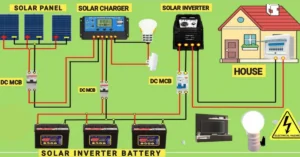
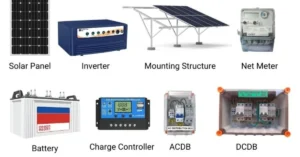


India is witnessing a silent revolution on its rooftops — and at the heart of this change is solar power. While most of us have heard of DC solar panels, there’s a rising star in the clean energy world: AC Solar Panels.
In this blog, we’ll demystify what AC solar panels are, how they work, why they could be the perfect fit for Indian homes, and how they compare to traditional systems. Ready? Let’s shine some light!
First, What Are AC Solar Panels?
C solar panels are just like regular solar panels, but with a twist — they come with a built-in microinverter. That means they directly generate Alternating Current (AC), which is the same type of electricity used in your home appliances.
DC vs AC Solar Panels at a Glance:
Feature | DC Solar Panels | AC Solar Panels |
Output | Direct Current (DC) | Alternating Current (AC) |
Inverter | Needs a central inverter | Comes with a built-in microinverter |
Scalability | Limited | Highly scalable |
Installation | Slightly complex | Easier, plug-and-play |
Performance in Shade | Drops significantly | Better performance due to independence |
How Do AC Solar Panels Work?
Each AC solar panel has a microinverter attached to the back, which instantly converts the sunlight into usable AC power. Instead of sending DC electricity to a central inverter (as in traditional systems), AC panels work independently and send AC power directly to your home’s grid or appliances.
This design offers several benefits, particularly in diverse Indian environments with partial shading, dust, or complex rooftop layouts.
Why AC Solar Panels Make Sense in India
India has a diverse range of weather conditions, from arid plains to coastal regions with abundant cloud cover. AC solar panels offer unique advantages that are particularly useful in Indian conditions:
1. More Power, Even in Partial Shade
In traditional DC systems, if one panel is shaded, the entire system suffers. But with AC panels, each one works independently, so one shaded panel won’t drag down the others.
2. Simple & Safer Installation
AC panels are plug-and-play, making the installation process faster and safer, especially important on older or uneven rooftops found in many Indian homes.
3. Easier to Expand Later
Would you like to add more panels in the future? With AC systems, you can easily scale up, panel by panel, perfect for growing families or rising electricity needs.
4. Remote Monitoring
Most AC solar panels offer mobile app-based performance tracking — so you can check how much energy you’re generating, panel-by-panel, right from your phone.
Is It Worth the Cost?
AC solar panels are slightly more expensive upfront than traditional DC panels. But here’s the catch: they save you more in the long run by:
- Delivering more energy overall
- Reducing downtime and maintenance
- Making expansion easier (no new inverter needed!)
Think of it as an investment in peace of mind, especially with increasing electricity bills and grid instability in many parts of India.
Ideal Use Cases for AC Solar Panels in India
- Urban homes with limited or shaded roof space
- Schools and small businesses want easier installations
- Apartments and gated societies considering rooftop solar
- Anyone who wants low-maintenance, efficient solar
Conclusion
AC solar panels are not just a tech upgrade — they’re a more innovative, more reliable, and more flexible way to go solar. Especially in India, where sunlight is abundant but rooftop conditions vary, AC panels can simplify and enhance the efficiency of solar adoption.
If you’re planning to go solar and want something future-ready, safe, and high-performing, AC solar panels are worth considering.