

As energy costs continue to rise and the push for clean energy grows stronger, solar power is becoming the go-to choice for Indian homeowners and businesses. But one of the most important decisions you’ll make when going solar is choosing between an On-Grid and an Off-Grid solar system.
Not sure which one suits you best? Don’t worry — we’ve got you covered. In this blog, we break down the key differences, benefits, and ideal use cases for On-Grid and Off-Grid solar systems in India.
What is an On-Grid Solar System?
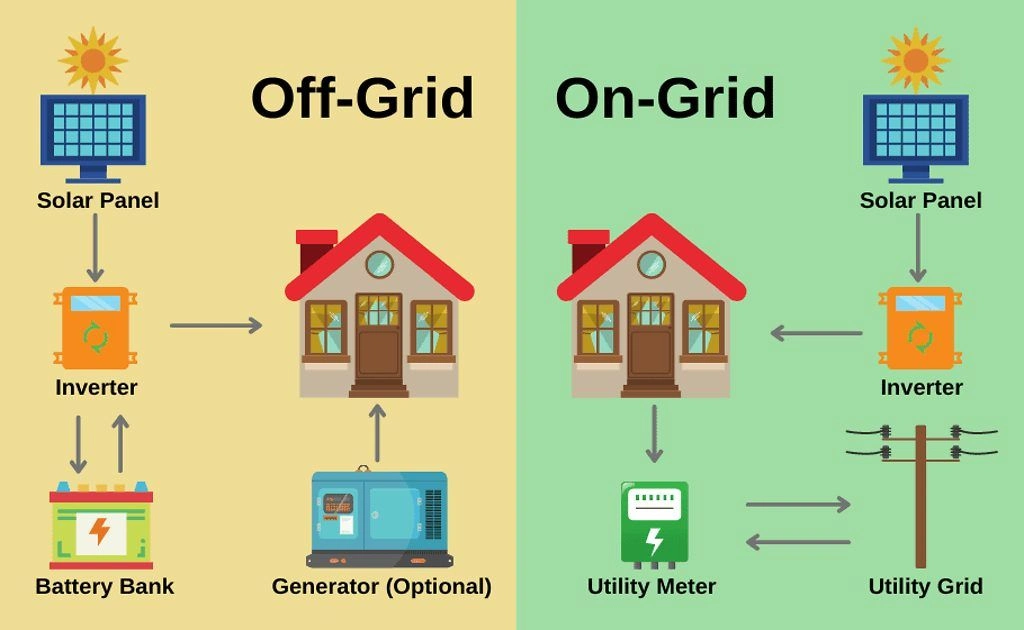
An On-Grid (also known as Grid-Tied) solar system is connected to your local electricity grid. It allows you to use solar power during the day, and automatically draws electricity from the grid when your solar system isn’t generating enough — like at night or during cloudy weather.
Key Features of On-Grid Systems:
- Connected to the main grid
- No batteries required
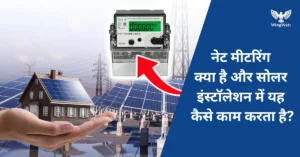
- Enables Net Metering (earn credits for excess power sent back)
- Suitable for urban areas with stable electricity
Advantages:
- Lower installation cost (no battery needed)
- Reduced electricity bills through Net Metering
- Minimal maintenance
- More efficient energy use for grid-connected homes or businesses
What is an Off-Grid Solar System?
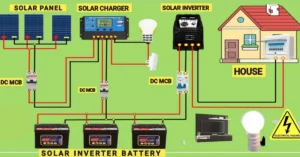
An Off-Grid solar system is completely independent. It is designed to power your home or business without relying on the utility grid. This type of system uses solar batteries to store excess power generated during the day for use at night or during power outages.
Key Features of Off-Grid Systems:
- No grid connection
- Battery storage required
- Complete energy independence
- Best for remote or rural locations with poor grid access
Advantages:
- Self-sufficiency — ideal for areas with no or unreliable electricity
- No electricity bills
- Reliable power backup even during outages
- Useful for farms, village homes, remote construction sites, and islands
On-Grid vs Off-Grid: A Quick Comparison
Feature | On-Grid System | Off-Grid System |
Grid Connection | Yes | No |
Battery Requirement | No | Yes |
Power Backup | No | Yes |
Net Metering | Yes | No |
Cost | Lower | Higher (due to batteries) |
Best For | Urban homes, businesses | Rural, remote locations |
Which Solar System is Right for Your Home?
Choosing the right system depends on your location, electricity needs, and budget.
Go for On-Grid if:
- You live in a city or a suburban area
- The grid is reliable
- Your goal is to cut down electricity bills
- You want faster ROI through Net Metering
Go for Off-Grid if:
- You live in a remote or rural area
- Power cuts are frequent
- You want complete energy independence
- You’re building in an area without grid access
What About Costs?
- On-Grid systems are more affordable upfront since they don’t require batteries.
- Off-Grid systems have a higher initial cost due to batteries and additional components but offer peace of mind in areas with poor electricity access.
In both cases, subsidies under India’s solar schemes and Net Metering policies (for On-Grid systems) help offset the costs significantly.
Conclusion
Both On-Grid and Off-Grid solar systems offer unique advantages depending on your energy goals and living conditions. What they share is the power to reduce your carbon footprint, lower energy expenses, and provide a cleaner, more sustainable future.
At [WingWatt Solar], we help homeowners and businesses choose the best-fit solar system with expert advice, site assessments, and end-to-end installation support.
